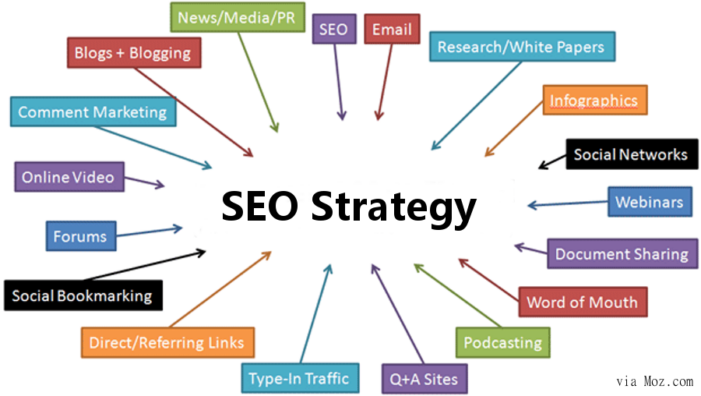
SEO stands for Search Engine Optimization, and it explains the logic behind a website’s ranking when you search on a specific search engine (such as Google). It’s a set of strategies practiced by website owners to improve their website’s ranking and traffic in search engines. Search engines display two types of results: “organic” results and paid results. The goal of an SEO specialist is to help websites rank better in “organic” search results.
Defining SEO
In short, SEO can be defined as a digital marketing strategy that helps increase the quantity and quality of traffic to your site.
The optimization part of SEO consists of a series of steps you can take to rank higher on Google and thus get free organic traffic.
Note that I say “steps,” meaning that as long as you follow each step (and are patient), you will see great results.
While SEO may seem tedious and difficult to understand at first, it can actually be fun and easy to implement.
The best way to understand SEO today is to break it down. In that sense, SEO is:
A Marketing Discipline
Understanding SEO is crucial to all your marketing efforts because it will allow you to drive traffic to your website and generate leads and conversions. You not only need to write content that Google loves, but also content that resonates with your audience.
Technical Tasks
Knowing the best practices for optimizing your content and site is crucial if you plan to compete for traffic. People who understand the ins and outs of search engine optimization are highly sought after because of the high ROI they bring.
An Interesting Field
I don’t know about you, but for me, creating great content and generating leads for free is pretty amazing. Plus, I love the ever-evolving nature of SEO and the fact that it requires marketers like me to constantly read about new algorithm changes and more.
How Does It Work?
SEO stands for Search Engine Optimization, which is the process of optimizing your website to get organic, or unpaid, traffic from search engine results pages.
In other words, SEO involves making specific changes to your website’s design and content that make it more appealing to search engines. You do this in the hope that search engines will display your website as a top result in search engine results pages.
While search engine optimization can be quite complex when it comes to all the different factors that influence your ranking, the basic process isn’t that difficult to understand.
Search engines want to provide the best service to their users. This means providing results on search engine pages that are not only high-quality but also relevant to what searchers are searching for.
To do this, search engines will scan, or crawl, various websites to better understand what they are about. This helps them provide more relevant results to those searching for specific topics or keywords.
Similarly, search engines will scan sites to determine how easy they are to navigate and read, rewarding user-friendly sites with higher rankings in search engine results pages.
SEO is the process organizations go through to help ensure that their sites rank highly in search engines for relevant keywords and phrases. For example, let’s say you have an article about how to build a birdhouse.
To get your content in front of the right people, you want to optimize this blog post so that it will appear as a top result for anyone searching for the phrase “building a birdhouse.”
SEO has many benefits for your business. By improving your SEO, you can work to expand your visibility in search engines. This helps you reach and engage more potential customers. By creating more engaging and effective SEO-focused content, you can increase your chances of attracting more targeted organic traffic.
Factors That Influence SEO:
1. Content Marketing
Content is effective in attracting search engines and helping your organization build relationships with site visitors.
The secret to creating content that is optimized for both search engines and your site visitors is to create a variety of well-written, diverse content types on topics that are most relevant to your audience.
2. On-Page SEO
On-page SEO is the practice of optimizing individual web pages to rank higher and drive more relevant traffic in search engines. On-page SEO refers to the content and HTML source code of a page that can be optimized, in contrast to off-page SEO, which refers to links and other external signals.
3. Off-Page SEO
Off-Page SEO refers to techniques you can use to improve a website’s position in search engine results pages (SERPs). Many people associate off-page SEO with link building, but it’s not limited to that.
Generally, off-page SEO refers to promotional methods—beyond website design—for the purpose of ranking a website higher in search results.
4. Social Media
Social media refers to websites and applications designed to allow people to share content quickly, efficiently, and in real time.
5. Keyword Research
Keyword research is the process of researching popular search terms that people type into search engines like Google and strategically incorporating them into your content to help your content appear higher in search engine results pages (SERPs).
SEO is a multifaceted science that is never-ending and constantly evolving. Every SEO would love to find a magic formula that could once and for all explain how SEO works, with specific rules and concrete equations.
Unfortunately, SEO is too complex to be put into a template. While it does evolve around certain principles and rules, it’s all about analyzing and implementing successful tactics and filtering out those that don’t.
Keep this in mind, and keep an eye on your competitors, and you’re sure to succeed in search results. This is how SEO works, and will continue to work until the process is completely outsourced to AI.

What Is SEO and How Does It Work? added by Fajar on
View all posts by Fajar →