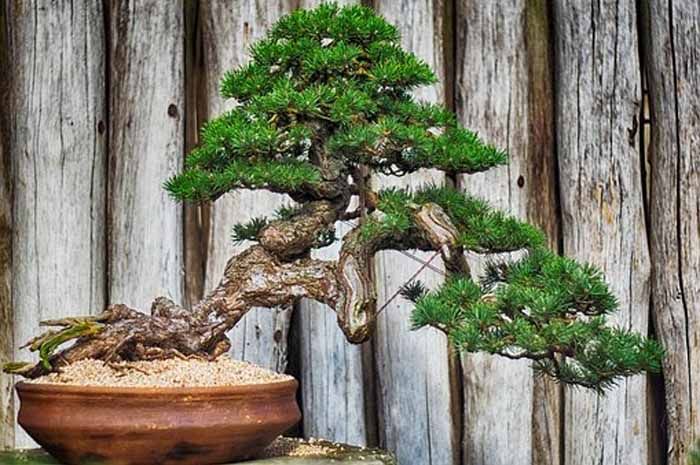
Selecting the right type of plant is closely related to the bonsai stock you will cultivate. There are certain characteristics that bonsai plants must possess.
In general, plants to be made into bonsai must meet the following requirements:
1. Dicotyledonous plants
Dicotyledonous plants, or plants with two cotyledons, generally have a tree-like shape. This type is ideal for bonsai compared to monocotyledonous plants. Plants classified as shrubs or bushes are less suitable for bonsai. There are monocotyledonous plants that can be dwarfed, such as the coconut palm, the ivory coconut, or bamboo. However, most are not considered true bonsai.
2. Longevity
Long-lived plants are ideal for bonsai, while annuals or single plants are not suitable. Because bonsai is a continuously growing art, plants are expected to survive for decades or even hundreds of years.
3. Tolerance to Suffering
Plants that are spoiled are not suitable for bonsai. Plants must be able to tolerate cramped and confined containers. This requirement requires the plant to survive with little food and minimal root and stem development.
4. Naturally Beautiful Shape
The natural appeal of a tree adds to the appeal of a bonsai, whether it’s the shape of the trunk, bark, roots, leaves, flowers, or fruit. Through training, the beauty of the plant becomes more proportional and visible.
5. Tolerance to Training and Forced Shaping
Some techniques used to achieve a beautiful plant appearance are actually torture for the plant itself. Plants that cannot tolerate this will die. To become a bonsai, a plant must be resistant to training or forced shaping. The plant must be able to withstand sculpting, wiring, and heavy pruning.

Characteristics of Plants Suitable for Bonsai added by Fajar on
View all posts by Fajar →