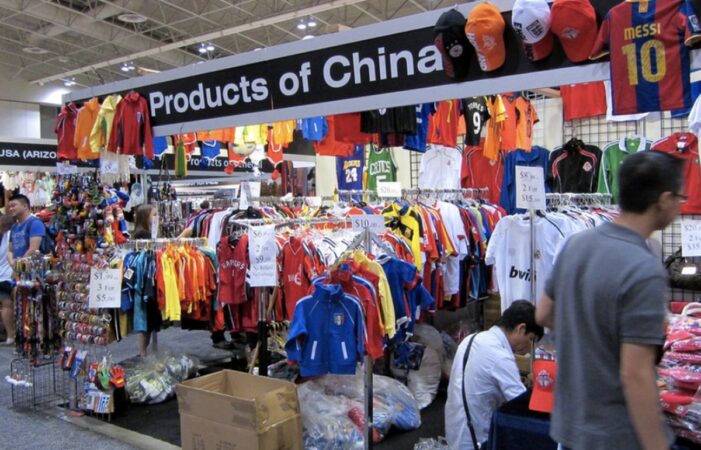
The world is overwhelmed because its countries (for example, the textile industry in Indonesia) are being flooded with Made-in-China products. They can sell products at low prices, with fairly good quality, and so on. Why are Chinese products so cheap? The answer is quite complex, but it makes sense.
- First, Chinese factories are incredibly large-scale. Imagine, they produce thousands to millions of items every day. The more items they make, the lower the cost per unit. This is called economies of scale. So it’s not because they’re careless; it’s precisely because of their large production scale that makes everything so much more efficient.
- Second, the supply chain in China is very close. Raw materials, components, machinery, and labor are all easily accessible, so they don’t need to import from far away places like many other countries. This is one of the biggest cost-saving factors.
Simply put, compared to Indonesia, many of our factories still have to import materials even though they are available domestically. - Third, regarding worker wages. In the past, factory worker wages in China were indeed relatively low. But now the situation has changed. The Chinese government continues to raise minimum wages, for example in major cities like Shanghai and Shenzhen.
What people often forget is the Chinese government’s very supportive role.
They strongly support local industry, building infrastructure, including roads and ports, providing affordable electricity, and even providing tax incentives for factories. The government recognizes that the manufacturing industry is a major key to their economic progress. Therefore, all facilities are built to ensure factories run smoothly, production costs are reduced, and competitiveness remains strong.
In some areas, the government has even deliberately created industrial zones, providing affordable land, easy access, and complete facilities for entrepreneurs.
So, the low price of Chinese products isn’t just due to “pressure” on workers, but because their country is truly committed to building a robust and integrated production system.
The bottom line is, it’s not about “cheapness,” but about extreme efficiency, extraordinary production, and most importantly, extraordinary government support.

Why are products from China so cheap? added by netizen on
View all posts by netizen →